Venture capital has spent two decades optimising for software. The playbook is well understood: small teams, fast iteration, near-zero marginal cost, capital deployed mostly against go-to-market. It works, and it has produced extraordinary returns.
It does not work for the companies building the physical layer underneath AI. Chips, robots, networking hardware, energy systems, and manufacturing equipment follow a different pattern. Development cycles run for years rather than quarters. Capital goes into fabs, tooling, and inventory. The hardest problem is rarely the demo. It is the transition from a working prototype to reliable production at volume, through supply chains that span half a dozen countries.
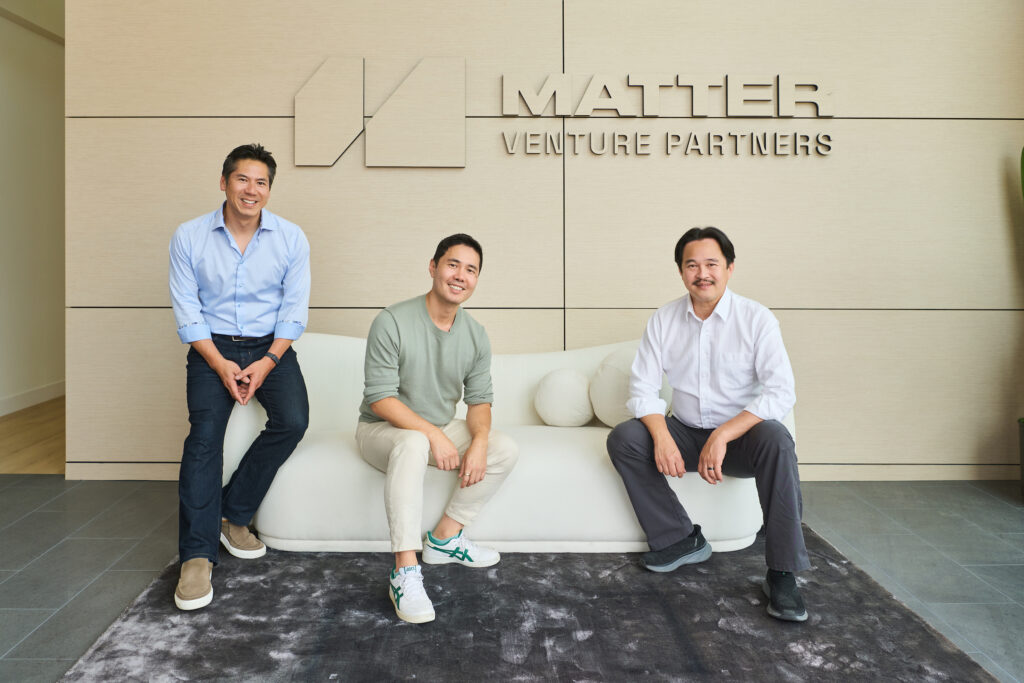
That mismatch between how venture capital is structured and what these companies actually need is the gap Matter Venture Partners was built to close, and it is why DFDF has committed as a limited partner to the firm’s second fund, which closed in September 2026 at $450 million.
The Team
One of the first things we assess in any manager is whether the people have done the hard version of this before, repeatedly, across cycles.
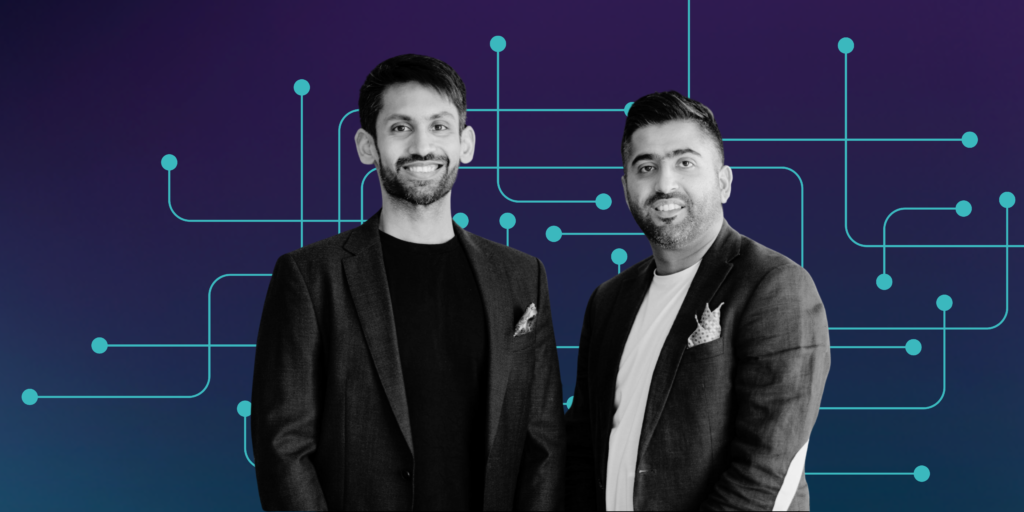
Wen Hsieh, Founding Managing Partner at Matter Venture Partners, spent 17 years at Kleiner Perkins, where he led the firm’s HardTech practice as a General Partner. His investments there included LuxVue, acquired by Apple, the battery company Amprius, and Desktop Metal. Haomiao Huang is a repeat founder and engineer who invested alongside Wen at Kleiner Perkins before co-founding Matter, and the two co-led investments in the robotics company Dexterity and the industrial CT company Lumafield. Mel Tang, Founding Operating Partner and CFO, previously held the CFO role at Ring and Demand Media. Bringing in a founding CFO at inception signals a view that operating discipline inside portfolio companies is a source of returns and highlights the institutional mindset with which the firm was built.
Validation From People Who Would Know
We look hard at who else has chosen to back a manager, particularly when those backers have no need to be in venture capital at all.
Matter’s strategic limited partners include ASML, TSMC, the Development Bank of Japan, Kleiner Perkins, Nitto Denko, Quanta Computer, Resonac, and Sojitz. That is a roster drawn from the centre of the global semiconductor and precision manufacturing economy. These firms do not need financial exposure to early-stage venture. They are there for proximity to what comes next, and they work with portfolio companies as technology collaborators, early customers, co-investors, manufacturing partners, and suppliers.
For a HardTech founder, that distinction is the whole game. An introduction to a foundry or a contract manufacturer at the right moment can compress a scale-up timeline by a year.
Why Dubai and Why Now
Every commitment DFDF makes carries a dual mandate: generate strong returns, and advance Dubai’s position as a global innovation hub.
Dubai has already made the policy decision. The Dubai Robotics and Automation Program targets raising the robotics sector’s contribution to Dubai’s GDP to 9% by 2032, and envisages 200k robots being deployed over that period across services, logistics, and industry. It is led by the Dubai Future Foundation. Nationally, Operation 300bn aims to raise the industrial sector’s contribution to GDP from AED 133 billion to AED 300 billion by 2031. Those are targets that get met with machines, chips, and automation software. Very little of that is built here yet. We want to start being able to bridge the best-in-class founders and companies in this space with the local ecosystem at the stage where a decision about where to pilot, localise, or eventually manufacture is still genuinely open.
How We Will Work Together
Dubai’s structural advantages for this category are real and specific. The emirate offers deep capital, world-class port and logistics infrastructure operating at genuine scale, a regulatory posture that favours pilots over paperwork, and a labour market where a policy environment that actively backs automation. For a robotics company whose technology needs high-volume, real-world environments to improve in, those are not small things.
I was fortunate to have the opportunity to spend some time with the Matter Venture Partners team in Los Altos over the summer, meeting a number of their portfolio companies and beginning to map out where DFDF can add the most value to them in the region. That time reinforced our conviction in the partnership. We are pleased to be backing the Matter team, and we look forward to bringing the best of this portfolio to Dubai.
About the Author
Lee Kasler is part of the Investments team at Dubai Future District Fund, where he focuses on identifying and supporting technology companies aligned with DFDF’s mandate to build Dubai’s venture and innovation ecosystem. His work spans direct co-investments across DFDF’s key focus sectors.