Introduction
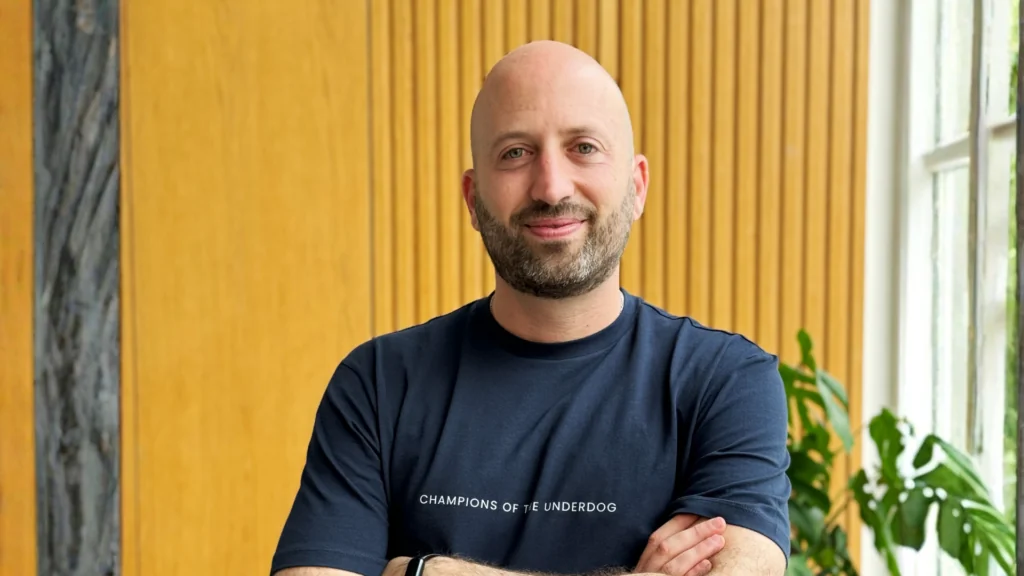
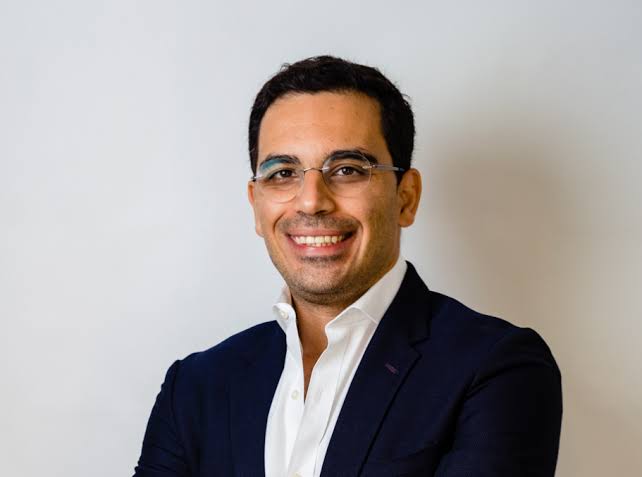
In the second edition of DFDF’s Emerging Manager Series, we sit down with Khaled Talhouni, Managing Partner of Nuwa Capital, an early-stage fund investing across the region’s fastest-moving technology markets. Nuwa has built its model around conviction-led portfolio construction, structured support for founders through value creation and access to specialist operators, and a candid reading of where regional venture is actually heading, rather than where the headlines suggest it should be.
Khaled reflects on a market that, in his view, is cooling for reasons that long predate recent events; on the discipline required to move from opportunistic to thesis-driven investing; and on what it takes to institutionalise a capital base in a regional ecosystem still writing its own history. It is a practical look at the mechanics behind a fund entering its second chapter, from ownership targets and pro-rata discipline to how carry is shared across the team.
I. Perspectives on Current Market Context
How would you describe the current VC market cycle?
Khaled sees a clear slowdown in capital deployment across the region, a pattern corroborated by MAGNiTT’s data. Crucially, he does not attribute it to recent geopolitical events alone. In his reading, the deceleration reflects a longer-term trajectory that was already underway, with recent conflict acting as an accelerant rather than a cause.
Global investors, meanwhile, are slowing their deployment and commitments. For managers still actively investing, Khaled frames this as an opening rather than a setback: with fewer participants competing for the same rounds, there is room to invest at more sensible valuations without being elbowed out of the deals that matter.
What is a maturing ecosystem doing to the quality of founders?
This, for Khaled, is the more important story. Founder quality has risen sharply, and he attributes it to an ecosystem maturing exponentially rather than incrementally. Successful startups produce alumni, and those alumni go on to launch companies of their own, each cohort better equipped than the last.
He describes it as a snowballing effect, pointing to the hundreds of companies that have emerged from Careem alumni alone. He expects the same pattern to repeat as graduates of the region’s more recent success stories step out to build. The talent compounding underneath the market, in other words, is moving in the opposite direction to the capital.
How is this climate affecting the way capital is being raised?
Less than one might assume, at least in Nuwa’s experience. Khaled reports that their own fundraising process has not slowed, despite a period of hesitation in March. Where he does see divergence is in the type of LP. Some global investors have adopted a wait and see posture, while local family offices, in his experience, have continued to engage and commit without significant delay. Proximity to the market, it seems, breeds conviction faster than distance does.
II. Fund Strategy
How does the macro environment change your approach across stages?
Considerably less at early stage than most would expect. Khaled notes that the current environment has minimal impact on their early-stage strategy, beyond ensuring portfolio companies hold sufficient runway to reach their next funding milestone. When the underwriting horizon is seven to ten years, a single cycle matters far less than the quality of the company being built.
Growth-stage is a different exercise entirely. There, the team is materially more valuation-sensitive, because the time horizons are shorter and the margin for error narrower. Later-stage investing demands a higher degree of certainty, and price becomes a far more active part of the decision.
What does thesis-driven investing look like in a maturing ecosystem?
As the ecosystem matures, Khaled argues that managers must move from opportunistic to thesis-driven investing. In practice, that means being as explicit about what you will not do as what you will. Nuwa deliberately avoids low-gross-margin businesses that depend on high volume to work, including certain categories of B2B marketplace.
The one criterion that holds regardless of model or sector is founder quality, on which he is unwilling to compromise. Khaled suggests that, as the market matures, thesis-driven investing will become more important, and says Nuwa has elements of that approach today that they intend to articulate in Fund II.
How do you approach portfolio construction and ownership?
For early-stage investments, Nuwa targets 10% to 15% ownership at entry, with a typical ticket size of $700,000 to $1.2 million. The firm protects its pro-rata rights until a company reaches roughly $80 million to $100 million in valuation, or until the team no longer believes an incremental dollar will return four to five times.
Where the target ownership simply is not available, the door is not automatically closed. Khaled will still invest where the team believes a disproportionate outcome is possible, or where they can build towards their position through a quick successive round.
III. Fund Manager “Edge”
What do you offer founders that others cannot?
Nuwa’s competitive edge, as Khaled describes it, sits in access, specifically to a network of subject matter experts across performance marketing, branding, HR and operations. These are the functions early-stage founders most often need and can least afford to get wrong.
The model has evolved. What began as a loose external network has moved progressively in-house, allowing the firm to drive value into portfolio companies more directly and more consistently, rather than depending on the availability of goodwill or third parties.
How do you build the team around that edge?
Through alignment, and Khaled is unusually direct about the mechanics. He advocates an egalitarian carry structure in which the delta between senior and junior partners is deliberately not significant, and where all team members, including those who are not partners, receive some carry.
For a small team, he sees this as the most effective way to sustain motivation and keep everyone genuinely invested in the same outcome. It is a structural choice rather than a cultural aspiration.
IV. LP Relationships and Fundraising
How did you build trust with LPs for the first fund?
Reflecting on Fund I, Khaled points to three things. The first was track record, built during his time at Wamda and with an Abu Dhabi government vehicle, which gave LPs a basis for judgement before Nuwa had one of its own. The second was a differentiated value proposition for founders, which is ultimately what generates access to the best companies.
The third was tone. The team made a point of being clear and honest about projections rather than overselling. He expects that calculus to shift over time: fundraising for subsequent funds will be driven increasingly by the numeric performance of the ones that came before.
How is your fundraising strategy evolving for Fund II?
The direction is towards institutionalisation. For Fund II and beyond, Khaled intends to build the investor base around a smaller number of large, institutionalised LPs and family offices, rather than a longer tail of smaller high-net-worth individuals. The objective is a more stable capital base and a more predictable relationship with it.
Longer term, he is looking outward, towards global capital from the US, Asia and Europe, to build a genuinely diversified LP base. He is realistic that this is a multi-year process, contingent on the region maturing further in the eyes of allocators who have yet to underwrite it.
V. Looking Ahead
What is the immediate priority for Nuwa?
Definition. The near-term focus is on articulating and documenting the investment thesis for Fund II, including the specific sectors and business models the firm will deliberately avoid. As Khaled sees it, a maturing market rewards managers who can say precisely what they are, and precisely what they are not, and penalises those who cannot.
What advice would you give to the next generation of emerging managers in MENA?
Khaled’s counsel to emerging managers is to prioritise the success of the business over rigid fundraising terms, particularly in the early days. Fundraising as a new manager is, in his words, a “hustle”, and there is no shame in it.
That extends to being pragmatic on terms. He sees no issue with offering fee discounts or co-investment rights to secure early closers as his view is that first-time managers should be pragmatic on terms, given they are still selling future promise rather than an established performance record.
___________
If you are an emerging VC fund manager building something distinctive in MENA, we want to hear from you. At DFDF, we are committed to supporting the investors shaping the region’s VC ecosystem.